
People
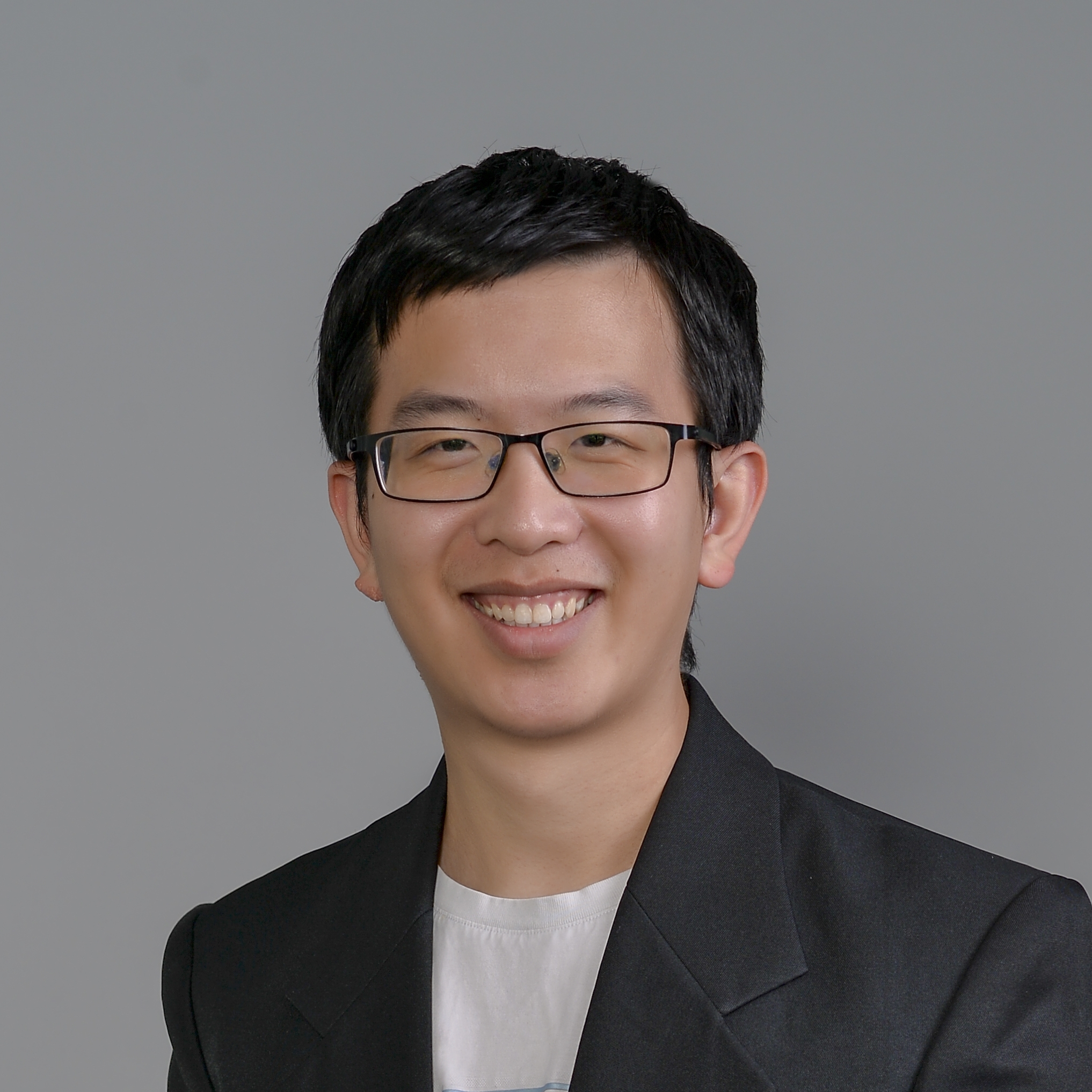
Senior Research Fellow
Wang Zihao
Title
Senior Research Fellow
Degree
PhD
Research Group
I-FIM Publications:
2026 |
Mayorov, Alexander S; Wang, Ping; Yue, Xiaokai; Wu, Biao; He, Jianhong; Zhang, Di; Lian, Fuzhuo; Jiang, Siqi; Huang, Jiabei; Wang, Zihao; Guo, Qian; Watanabe, Kenji; Taniguchi, Takashi; Du, Renjun; Wang, Rui; Wang, Baigeng; Wang, Lei; Novoselov, Kostya S; Yu, Geliang Quantum Hall effect at 0.002 T in graphene NATURE COMMUNICATIONS, 17 (1), 2026, DOI: 10.1038/s41467-026-68695-8. @article{WOS:001700052100001, title = {Quantum Hall effect at 0.002 T in graphene}, author = {Alexander S Mayorov and Ping Wang and Xiaokai Yue and Biao Wu and Jianhong He and Di Zhang and Fuzhuo Lian and Siqi Jiang and Jiabei Huang and Zihao Wang and Qian Guo and Kenji Watanabe and Takashi Taniguchi and Renjun Du and Rui Wang and Baigeng Wang and Lei Wang and Kostya S Novoselov and Geliang Yu}, doi = {10.1038/s41467-026-68695-8}, times_cited = {6}, year = {2026}, date = {2026-01-01}, journal = {NATURE COMMUNICATIONS}, volume = {17}, number = {1}, publisher = {NATURE PORTFOLIO}, address = {HEIDELBERGER PLATZ 3, BERLIN, 14197, GERMANY}, abstract = {Graphene enables precise carrier-density control via gating, making it an ideal platform for studying electronic interactions. However, sample inhomogeneities often limit access to the low-density regimes where these interactions dominate. Enhancing carrier mobility is therefore crucial for exploring fundamental properties and developing device applications. Here, we demonstrate a significant reduction in external inhomogeneity using a double-layer graphene architecture separated by an ultra-thin hexagonal boron nitride layer. Mutual screening between the layers reduces scattering from random Coulomb potentials, resulting in a quantum mobility exceeding 107cm2V-1s-1textbackslashdocumentclass[12pt]minimal textbackslashusepackageamsmath textbackslashusepackagewasysym textbackslashusepackageamsfonts textbackslashusepackageamssymb textbackslashusepackageamsbsy textbackslashusepackagemathrsfs textbackslashusepackageupgreek textbackslashsetlengthtextbackslashoddsidemargin-69pt textbackslashbegindocument$$10<^>7textbackslash rmctextbackslashrmm<^>2textba ckslashrmV<^>-1textbackslashrms<^ >-1$$textbackslashenddocument. Shubnikov-de Haas oscillations emerge at magnetic fields below 1 mT, while integer quantum Hall features are observed at 0.002 T. Furthermore, we identify a fractional quantum Hall plateau at a filling factor of vtot=-10/3textbackslashdocumentclass[12pt]minimal textbackslashusepackageamsmath textbackslashusepackagewasysym textbackslashusepackageamsfonts textbackslashusepackageamssymb textbackslashusepackageamsbsy textbackslashusepackagemathrsfs textbackslashusepackageupgreek textbackslashsetlengthtextbackslashoddsidemargin-69pt textbackslashbegindocument$$v_textbackslashrmto t=-10/3$$textbackslashenddocument at 2 T. These results demonstrate the platform's suitability for investigating strongly correlated electronic phases in graphene-based heterostructures.}, keywords = {}, pubstate = {published}, tppubtype = {article} } Graphene enables precise carrier-density control via gating, making it an ideal platform for studying electronic interactions. However, sample inhomogeneities often limit access to the low-density regimes where these interactions dominate. Enhancing carrier mobility is therefore crucial for exploring fundamental properties and developing device applications. Here, we demonstrate a significant reduction in external inhomogeneity using a double-layer graphene architecture separated by an ultra-thin hexagonal boron nitride layer. Mutual screening between the layers reduces scattering from random Coulomb potentials, resulting in a quantum mobility exceeding 107cm2V-1s-1textbackslashdocumentclass[12pt]minimal textbackslashusepackageamsmath textbackslashusepackagewasysym textbackslashusepackageamsfonts textbackslashusepackageamssymb textbackslashusepackageamsbsy textbackslashusepackagemathrsfs textbackslashusepackageupgreek textbackslashsetlengthtextbackslashoddsidemargin-69pt textbackslashbegindocument$$10<^>7textbackslash rmctextbackslashrmm<^>2textba ckslashrmV<^>-1textbackslashrms<^ >-1$$textbackslashenddocument. Shubnikov-de Haas oscillations emerge at magnetic fields below 1 mT, while integer quantum Hall features are observed at 0.002 T. Furthermore, we identify a fractional quantum Hall plateau at a filling factor of vtot=-10/3textbackslashdocumentclass[12pt]minimal textbackslashusepackageamsmath textbackslashusepackagewasysym textbackslashusepackageamsfonts textbackslashusepackageamssymb textbackslashusepackageamsbsy textbackslashusepackagemathrsfs textbackslashusepackageupgreek textbackslashsetlengthtextbackslashoddsidemargin-69pt textbackslashbegindocument$$v_textbackslashrmto t=-10/3$$textbackslashenddocument at 2 T. These results demonstrate the platform's suitability for investigating strongly correlated electronic phases in graphene-based heterostructures.
|
2025 |
Chen, Chao; Liu, Yulu; Lu, Hongyan; Wang, Zihao; Zheng, Bowen; Guo, Qian; Xiao, Jingkuan; Wang, Ping; Xu, Wanting; Han, Yulin; Chen, Mingxuan; Cai, Xiaofan; Huang, Jiabei; Han, Yaqing; Zhang, Di; Du, Renjun; Mayorov, Alexander S; Li, Ziying; Zhang, Shuai; Huang, Yi; Cheng, Tingting; Chen, Zhaolong; Liu, Ronghua; Tang, Nujiang; Ni, Haibo; Wu, Di; Gao, Libo; Xi, Xiaoxiang; Wang, Qianghua; Wang, Lei; Novoselov, Kostya S; Yu, Geliang Chemical vapor deposition growth of continuous monolayer antiferromagnetic CrOCl films NATURE COMMUNICATIONS, 16 (1), 2025, DOI: 10.1038/s41467-025-66142-8. @article{WOS:001642086800006, title = {Chemical vapor deposition growth of continuous monolayer antiferromagnetic CrOCl films}, author = {Chao Chen and Yulu Liu and Hongyan Lu and Zihao Wang and Bowen Zheng and Qian Guo and Jingkuan Xiao and Ping Wang and Wanting Xu and Yulin Han and Mingxuan Chen and Xiaofan Cai and Jiabei Huang and Yaqing Han and Di Zhang and Renjun Du and Alexander S Mayorov and Ziying Li and Shuai Zhang and Yi Huang and Tingting Cheng and Zhaolong Chen and Ronghua Liu and Nujiang Tang and Haibo Ni and Di Wu and Libo Gao and Xiaoxiang Xi and Qianghua Wang and Lei Wang and Kostya S Novoselov and Geliang Yu}, doi = {10.1038/s41467-025-66142-8}, times_cited = {7}, year = {2025}, date = {2025-12-01}, journal = {NATURE COMMUNICATIONS}, volume = {16}, number = {1}, publisher = {NATURE PORTFOLIO}, address = {HEIDELBERGER PLATZ 3, BERLIN, 14197, GERMANY}, abstract = {The discovery of two-dimensional magnetic materials has provided an ideal platform for exploring physical phenomena in the two-dimensional limit. However, intrinsic two-dimensional antiferromagnetic materials have been rarely reported, limiting systematic studies of their electronic properties. The discovery of novel intrinsic two-dimensional antiferromagnets and the development of robust synthesis strategies, therefore, remain significant challenges. Here, we report the chemical vapor deposition synthesis of CrOCl monolayer films and nanosheets that exhibit excellent air stability. The CrOCl morphology is tunable, ranging from two-dimensional nanosheets to three-dimensional flower-like structures, with lateral sizes ranging from several microns to continuous monolayer films. Structural characterization confirms the material's composition and high crystalline quality. Furthermore, magnetic measurements, supported by theoretical calculations, reveal a N & eacute;el temperature for CrOCl of approximate to 14 K. This work provides a reliable route for preparing two-dimensional antiferromagnetic materials.}, keywords = {}, pubstate = {published}, tppubtype = {article} } The discovery of two-dimensional magnetic materials has provided an ideal platform for exploring physical phenomena in the two-dimensional limit. However, intrinsic two-dimensional antiferromagnetic materials have been rarely reported, limiting systematic studies of their electronic properties. The discovery of novel intrinsic two-dimensional antiferromagnets and the development of robust synthesis strategies, therefore, remain significant challenges. Here, we report the chemical vapor deposition synthesis of CrOCl monolayer films and nanosheets that exhibit excellent air stability. The CrOCl morphology is tunable, ranging from two-dimensional nanosheets to three-dimensional flower-like structures, with lateral sizes ranging from several microns to continuous monolayer films. Structural characterization confirms the material's composition and high crystalline quality. Furthermore, magnetic measurements, supported by theoretical calculations, reveal a N & eacute;el temperature for CrOCl of approximate to 14 K. This work provides a reliable route for preparing two-dimensional antiferromagnetic materials.
|
Deng, Ya; Wang, Zihao; Hu, Zhili; Li, Ang; Zhou, Xin; Chen, Zhaolong; Wang, Xingli; Liu, Jiawei; Yi, Kongyang; Yuan, Dundong; Wang, Xiaowei; Zhang, Peikun; Zhu, Chao; Zhao, Xiaoxu; Ma, Wei; Wu, Yao; Duan, Ruihuan; Fu, Qundong; Yang, Jiefu; Zhou, Xiuxian; Cao, Mengyao; Zhu, Chao; Tay, Beng Kang; Zhang, Jian; Perrin, Mickael Lucien; Zhou, Wu; Zhang, Zhuhua; Novoselov, Kostya S; Liu, Zheng Tellurium-assisted growth of large-scale atom-thin insulating amorphous carbon on insulating substrates NATURE COMMUNICATIONS, 16 (1), 2025, DOI: 10.1038/s41467-025-63872-7. @article{WOS:001587519800007, title = {Tellurium-assisted growth of large-scale atom-thin insulating amorphous carbon on insulating substrates}, author = {Ya Deng and Zihao Wang and Zhili Hu and Ang Li and Xin Zhou and Zhaolong Chen and Xingli Wang and Jiawei Liu and Kongyang Yi and Dundong Yuan and Xiaowei Wang and Peikun Zhang and Chao Zhu and Xiaoxu Zhao and Wei Ma and Yao Wu and Ruihuan Duan and Qundong Fu and Jiefu Yang and Xiuxian Zhou and Mengyao Cao and Chao Zhu and Beng Kang Tay and Jian Zhang and Mickael Lucien Perrin and Wu Zhou and Zhuhua Zhang and Kostya S Novoselov and Zheng Liu}, doi = {10.1038/s41467-025-63872-7}, times_cited = {0}, year = {2025}, date = {2025-10-01}, journal = {NATURE COMMUNICATIONS}, volume = {16}, number = {1}, publisher = {NATURE PORTFOLIO}, address = {HEIDELBERGER PLATZ 3, BERLIN, 14197, GERMANY}, abstract = {Monolayer amorphous carbon (a-C), an atom-thin two-dimensional (2D) carbon amorphous material, has attracted significant attention due to its structural and transport properties. Here, we report a chemical vapor deposition (CVD) approach for directly synthesizing monolayer a-C films on insulating substrates, achieving high control over their size, thickness, and fabrication. The synthesized films exhibit a complete coverage over a 2-inch wafer, with high uniformity. Our theoretical analysis reveals the critical role of tellurium in promoting the growth of monolayer a-C on the substrate. Moreover, quantum tunneling measurements at liquid helium temperature were conducted on the a-C films, confirming the samples' homogeneity and their insulating behavior. This work provides a promising strategy for direct synthesis of atom-thin insulating amorphous materials and deepens our understanding of quantum phenomena and electronic properties in low-dimensional disordered materials.}, keywords = {}, pubstate = {published}, tppubtype = {article} } Monolayer amorphous carbon (a-C), an atom-thin two-dimensional (2D) carbon amorphous material, has attracted significant attention due to its structural and transport properties. Here, we report a chemical vapor deposition (CVD) approach for directly synthesizing monolayer a-C films on insulating substrates, achieving high control over their size, thickness, and fabrication. The synthesized films exhibit a complete coverage over a 2-inch wafer, with high uniformity. Our theoretical analysis reveals the critical role of tellurium in promoting the growth of monolayer a-C on the substrate. Moreover, quantum tunneling measurements at liquid helium temperature were conducted on the a-C films, confirming the samples' homogeneity and their insulating behavior. This work provides a promising strategy for direct synthesis of atom-thin insulating amorphous materials and deepens our understanding of quantum phenomena and electronic properties in low-dimensional disordered materials.
|
2023 |
Hu, Junxiong; Tan, Junyou; Ezzi, Mohammed Al M; Chattopadhyay, Udvas; Gou, Jian; Zheng, Yuntian; Wang, Zihao; Chen, Jiayu; Thottathil, Reshmi; Luo, Jiangbo; Watanabe, Kenji; Taniguchi, Takashi; Wee, Andrew Thye Shen; Adam, Shaffique; Ariando, A Controlled alignment of supermoire lattice in double-aligned graphene heterostructures 27 NATURE COMMUNICATIONS, 14 (1), 2023, DOI: 10.1038/s41467-023-39893-5. @article{WOS:001029450400007, title = {Controlled alignment of supermoire lattice in double-aligned graphene heterostructures}, author = {Junxiong Hu and Junyou Tan and Mohammed M Al Ezzi and Udvas Chattopadhyay and Jian Gou and Yuntian Zheng and Zihao Wang and Jiayu Chen and Reshmi Thottathil and Jiangbo Luo and Kenji Watanabe and Takashi Taniguchi and Andrew Thye Shen Wee and Shaffique Adam and A Ariando}, doi = {10.1038/s41467-023-39893-5}, times_cited = {27}, year = {2023}, date = {2023-07-01}, journal = {NATURE COMMUNICATIONS}, volume = {14}, number = {1}, publisher = {NATURE PORTFOLIO}, address = {HEIDELBERGER PLATZ 3, BERLIN, 14197, GERMANY}, abstract = {The supermoire lattice, built by stacking two moire patterns, provides a platform for creating flat mini-bands and studying electron correlations. An ultimate challenge in assembling a graphene supermoire lattice is in the deterministic control of its rotational alignment, which is made highly aleatory due to the random nature of the edge chirality and crystal symmetry. Employing the so-called ``golden rule of three'', here we present an experimental strategy to overcome this challenge and realize the controlled alignment of double-aligned hBN/graphene/hBN supermoire lattice, where the twist angles between graphene and top/bottom hBN are both close to zero. Remarkably, we find that the crystallographic edge of neighboring graphite can be used to better guide the stacking alignment, as demonstrated by the controlled production of 20 moire samples with an accuracy better than similar to 0.2 degrees. Finally, we extend our technique to low-angle twisted bilayer graphene and ABC-stacked trilayer graphene, providing a strategy for flat-band engineering in these moirematerials.}, keywords = {}, pubstate = {published}, tppubtype = {article} } The supermoire lattice, built by stacking two moire patterns, provides a platform for creating flat mini-bands and studying electron correlations. An ultimate challenge in assembling a graphene supermoire lattice is in the deterministic control of its rotational alignment, which is made highly aleatory due to the random nature of the edge chirality and crystal symmetry. Employing the so-called ``golden rule of three'', here we present an experimental strategy to overcome this challenge and realize the controlled alignment of double-aligned hBN/graphene/hBN supermoire lattice, where the twist angles between graphene and top/bottom hBN are both close to zero. Remarkably, we find that the crystallographic edge of neighboring graphite can be used to better guide the stacking alignment, as demonstrated by the controlled production of 20 moire samples with an accuracy better than similar to 0.2 degrees. Finally, we extend our technique to low-angle twisted bilayer graphene and ABC-stacked trilayer graphene, providing a strategy for flat-band engineering in these moirematerials.
|