
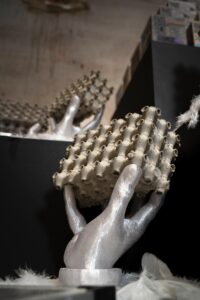
A showcase of material intelligence, geometry, and sustainable design
The Institute for Functional Intelligent Materials (I-FIM) proudly participated in the 19th International Architecture Exhibition – La Biennale di Venezia 2025, one of the world’s most prominent platforms for architectural and material innovation. This year’s edition, curated by architect and engineer Carlo Ratti, explores the theme “Intelligens. Natural. Artificial. Collective.”, challenging designers to rethink how intelligence — in all its forms — shapes the built environment.
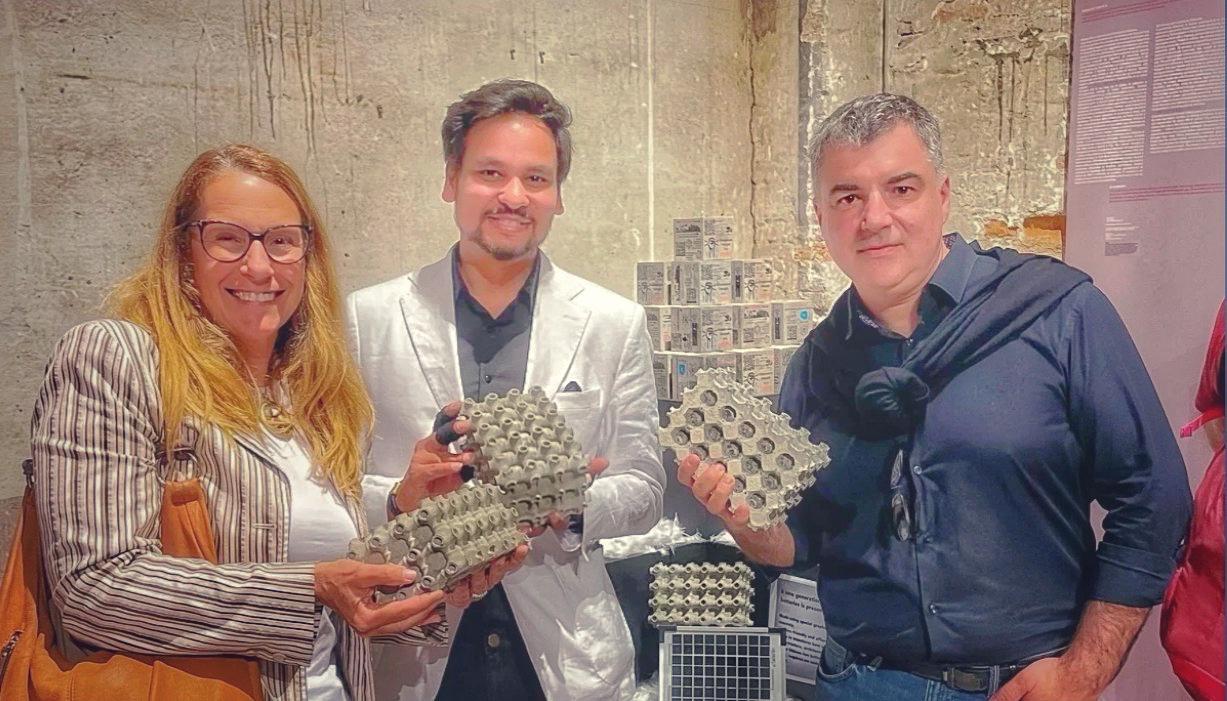
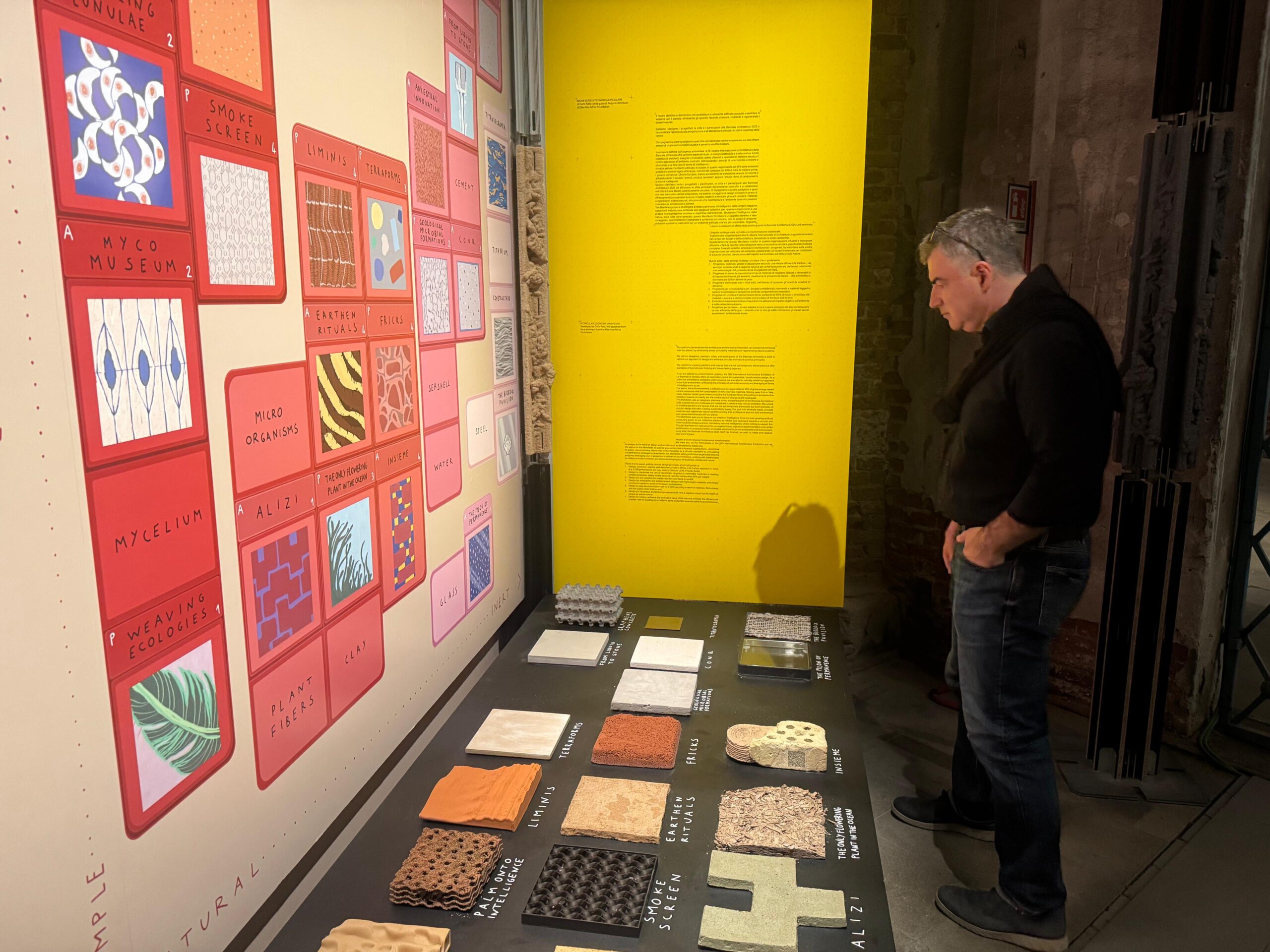
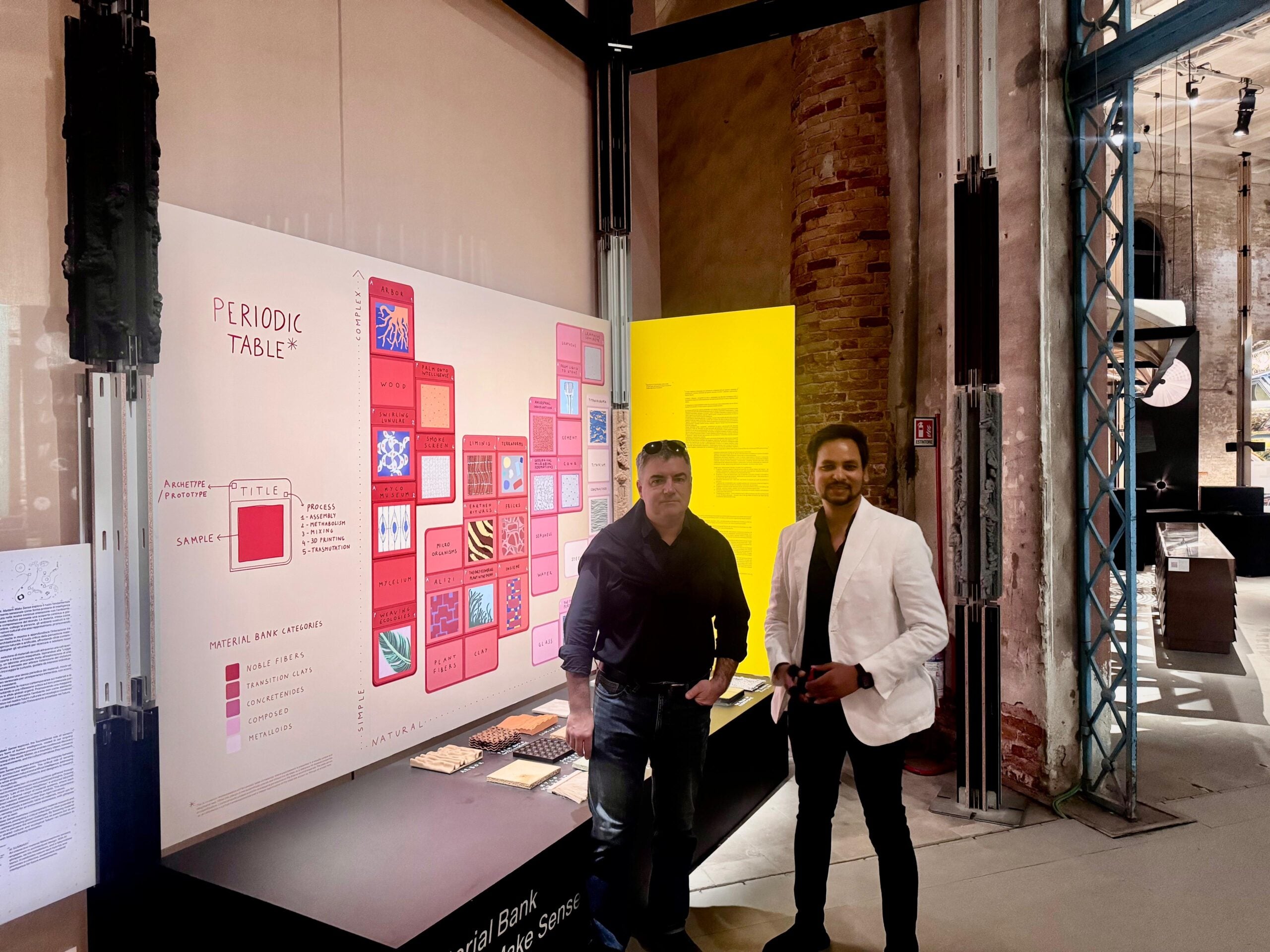
I-FIM’s contribution was featured in the Material Bank section, co-curated by I-FIM Director, Nobel Laureate Professor Sir Konstantin Novoselov, alongside Stefano Capolongo, Ingrid Maria Paoletti, and Margherita Palli of Politecnico di Milano. This curated area reframes materials as active participants in the design process — not inert components, but intelligent systems that carry performance, environmental, and expressive potential.
Graphene-Enhanced Concrete: Smarter, Stronger, More Sustainable
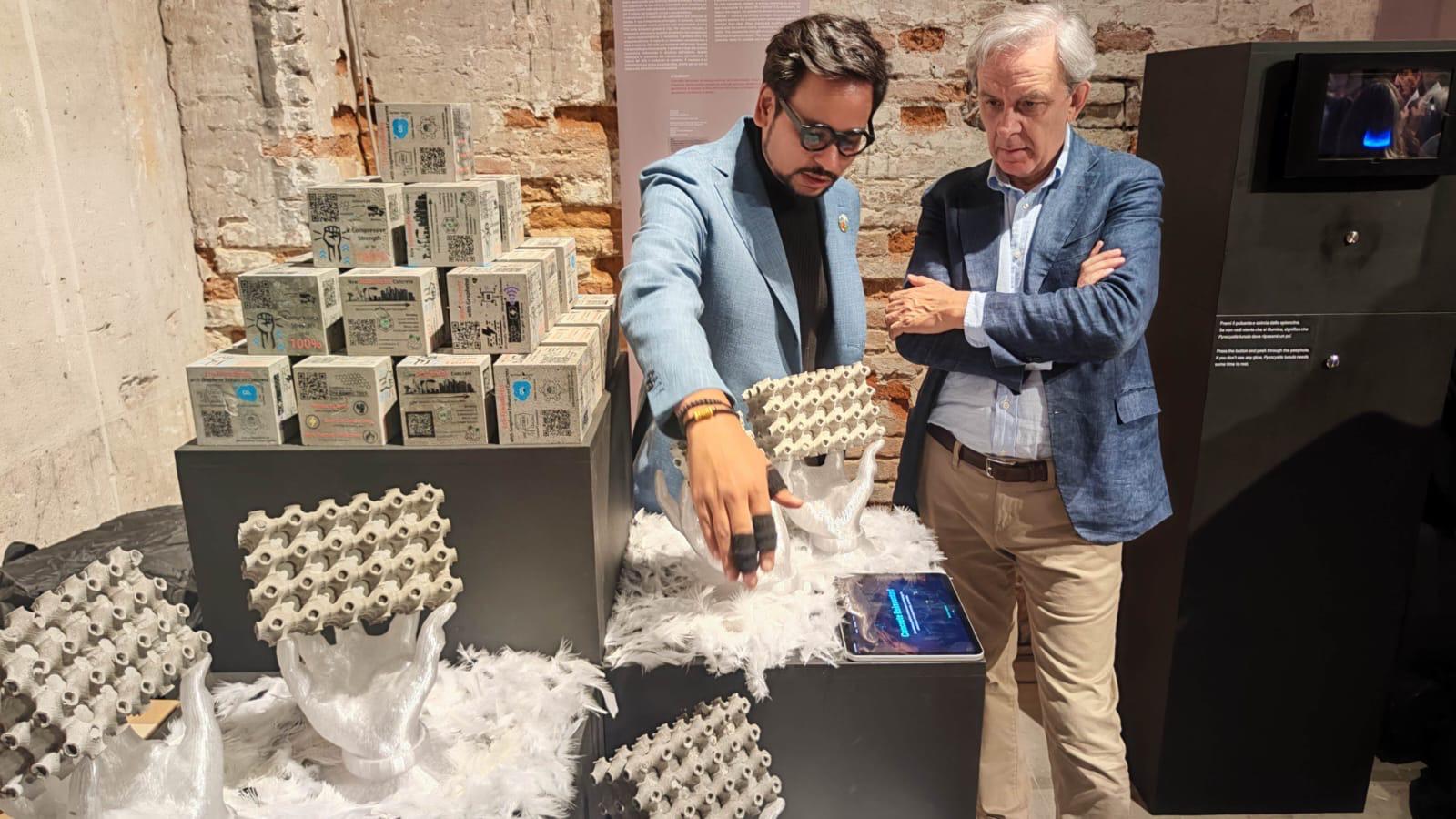
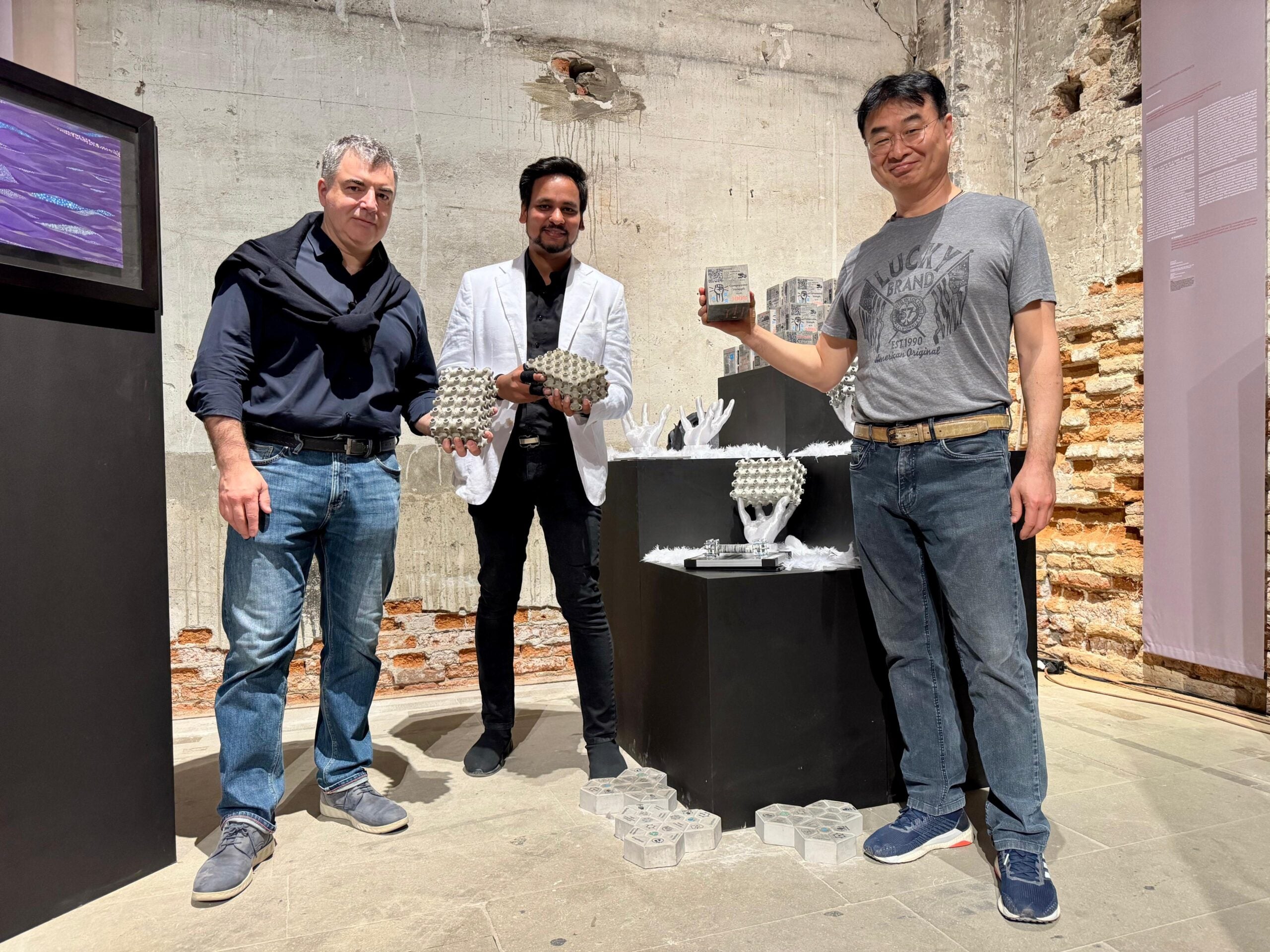
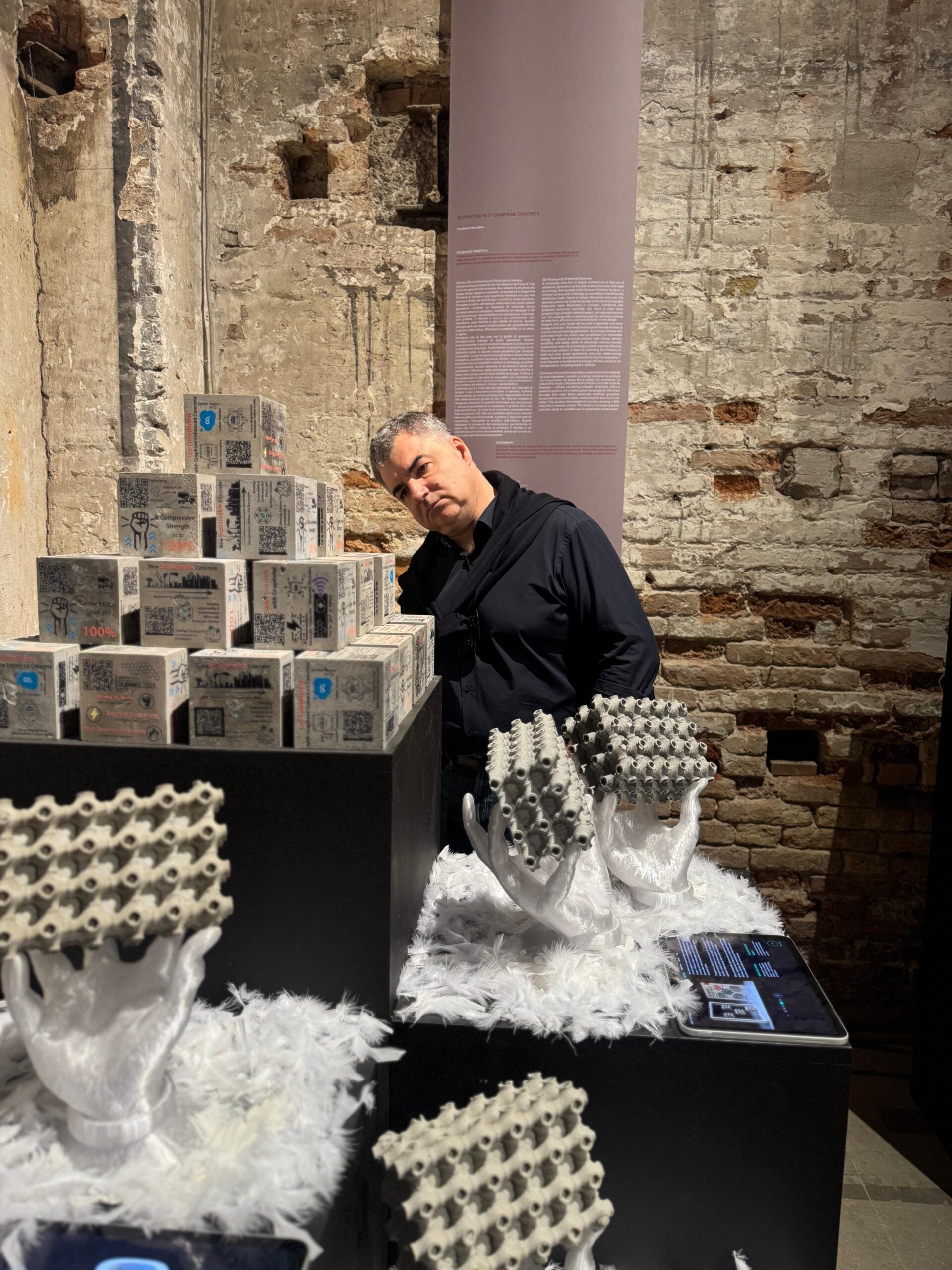
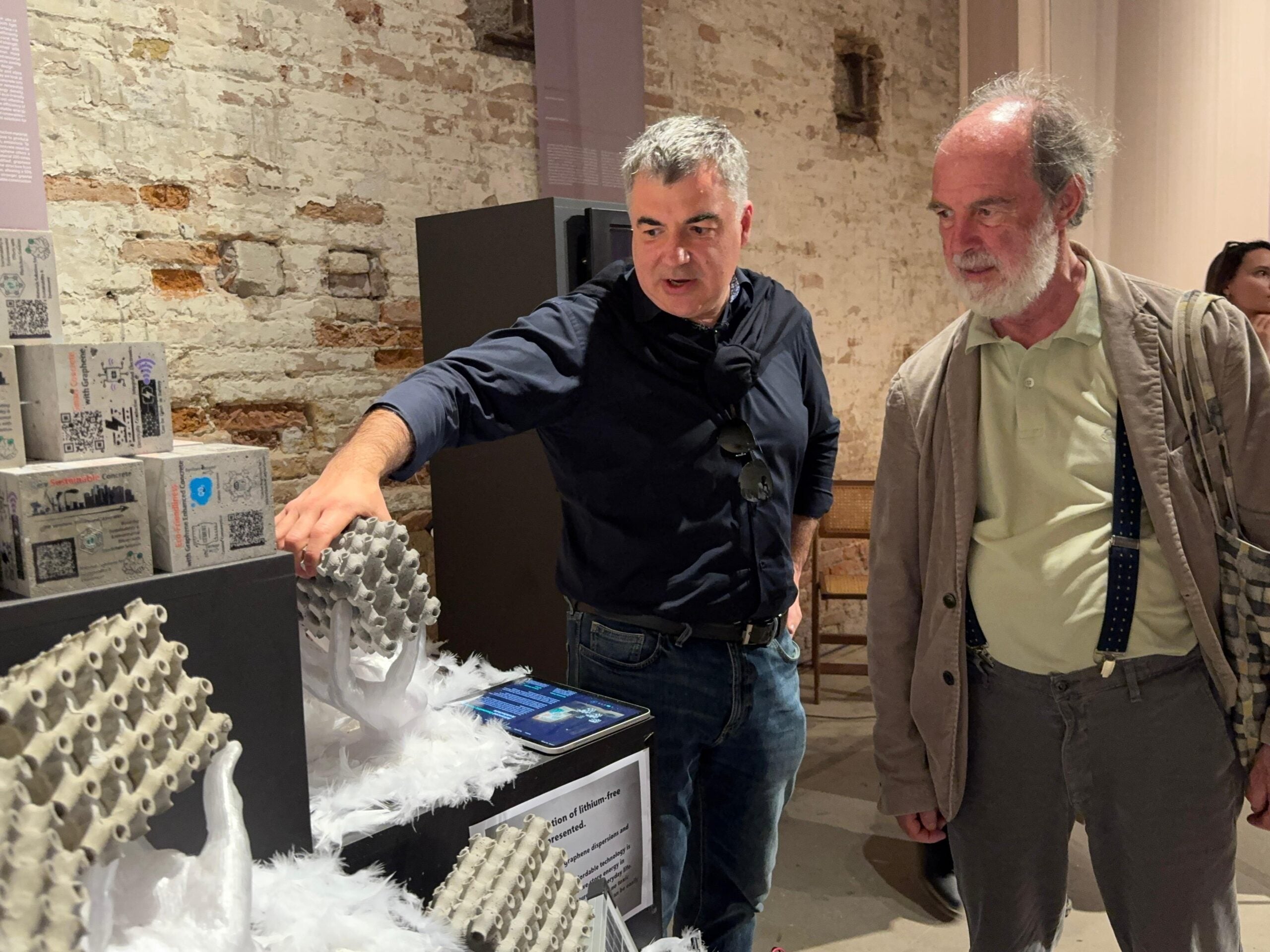
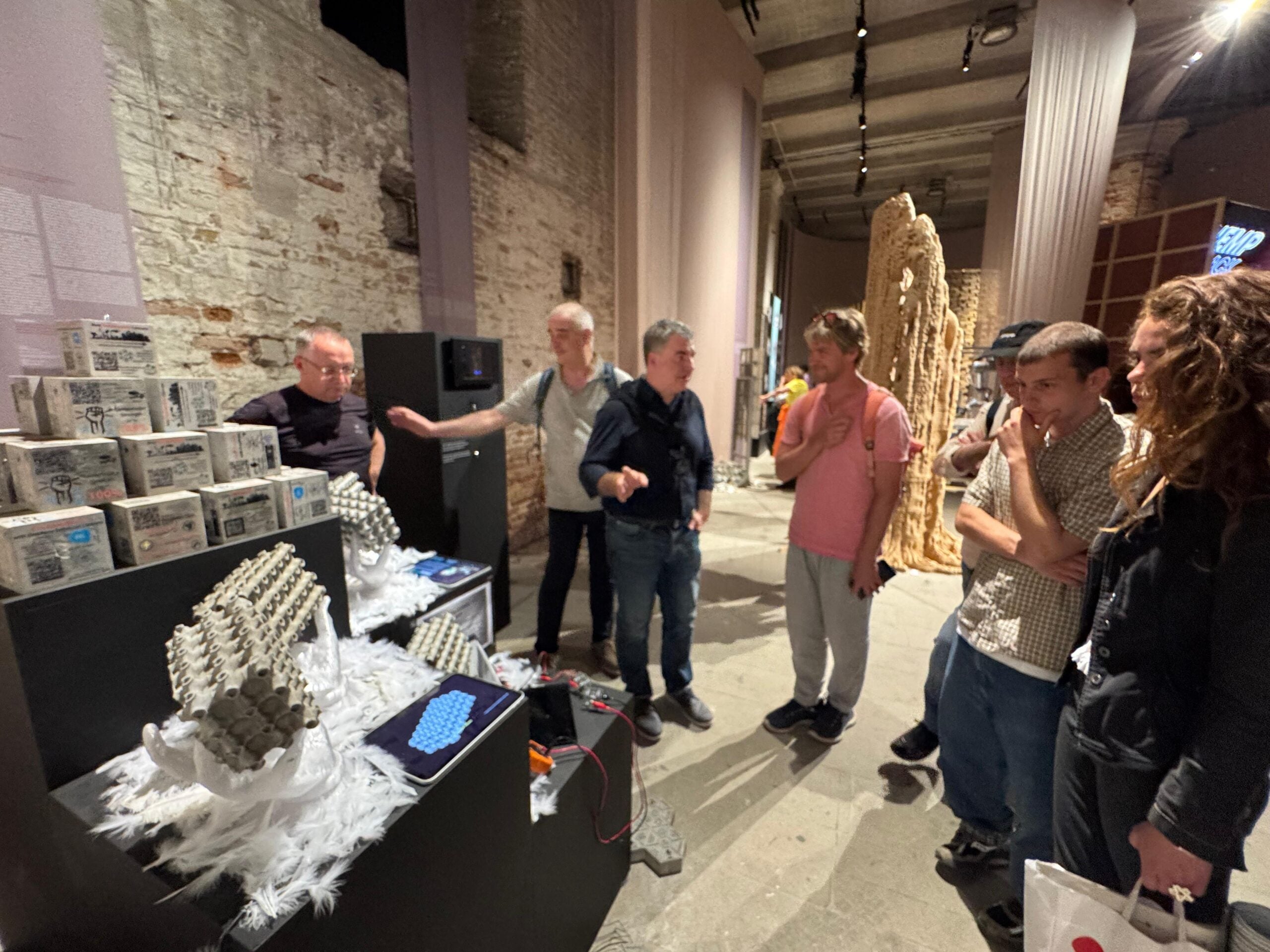
At the core of I-FIM’s installation is research on graphene-enhanced concrete — a novel composite that significantly improves strength, durability, and thermal performance, while reducing reliance on conventional cement. Developed through interdisciplinary collaboration, this innovation represents a shift toward resource-efficient, high-performance construction materials that address the demands of a rapidly changing climate.
We’re not only shaping structures—we’re rethinking the matter they’re made of,” said Prof. Novoselov.
Geometry and Fabrication Inspired by Nature
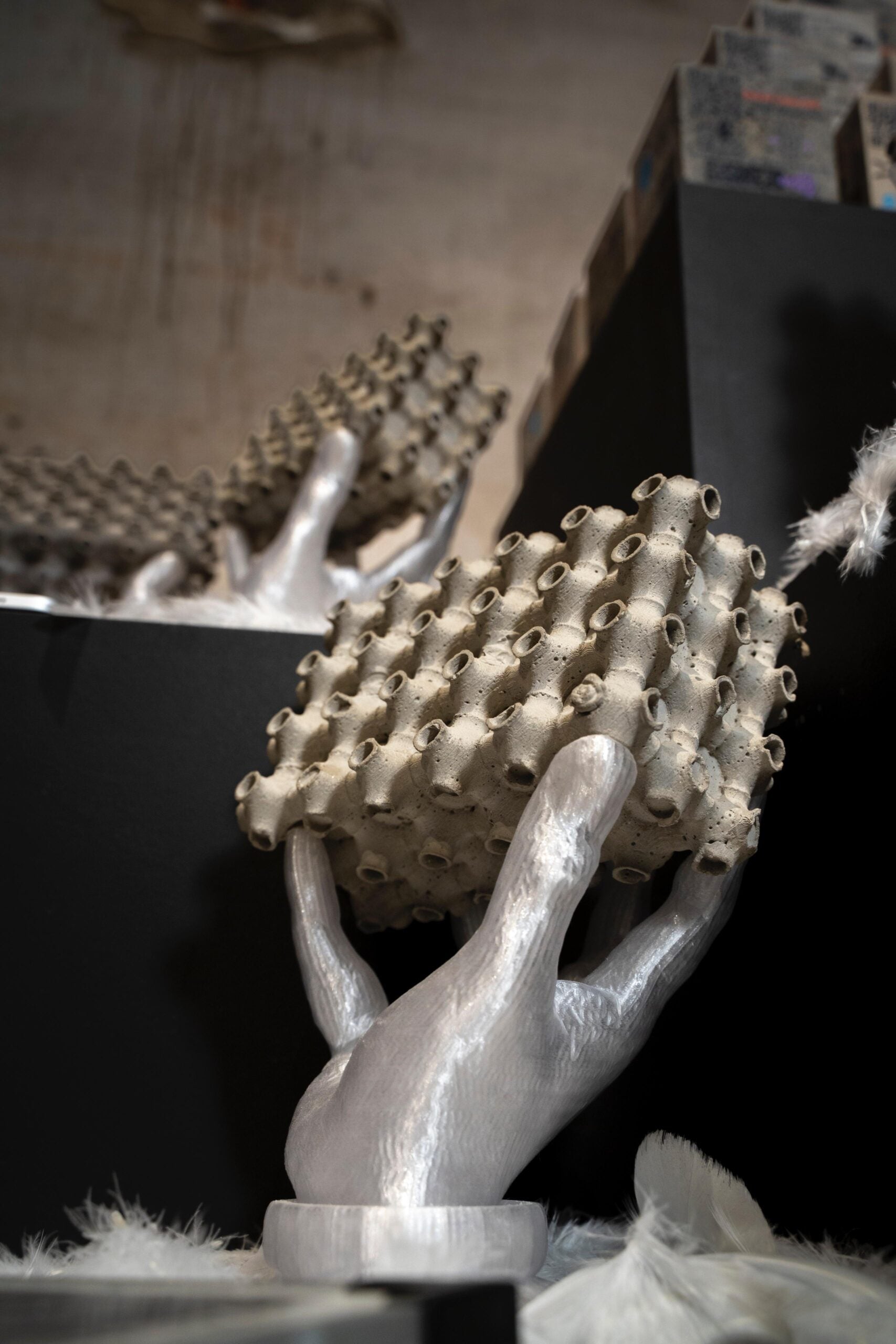
To explore the spatial potential of this intelligent material, the team designed a series of 3D-printed concrete modules based on triply periodic minimal surfaces, such as the Schwarz Primitive surface. These geometries, found in nature and molecular biology, offer both structural efficiency and formal elegance.
Fabricated through additive manufacturing, the modules demonstrate how digital design and biomimicry can converge to create lightweight, load-bearing forms with minimal material use and visual sophistication.
“These forms express a fusion of computation, material efficiency, and spatial poetry,” said Ar. Abhimanyu Goel, the project’s lead architect.
Project Team
- Prof. Sir Konstantin Novoselov – Material Science Innovator, I-FIM
- Dr. Maxim Rybin – Graphene Technology Developer, I-FIM
- Dr. Virgil Gavriliuc – Chemistry Developer, I-FIM
- Prof. Harn Wei Kua – Construction Materials Scientist, College of Design and Engineering, NUS
- Ar. Abhimanyu Goel – Architect of Novel Material, College of Design and Engineering, NUS
- Ben Yuan – Technical and Architecture Engineer
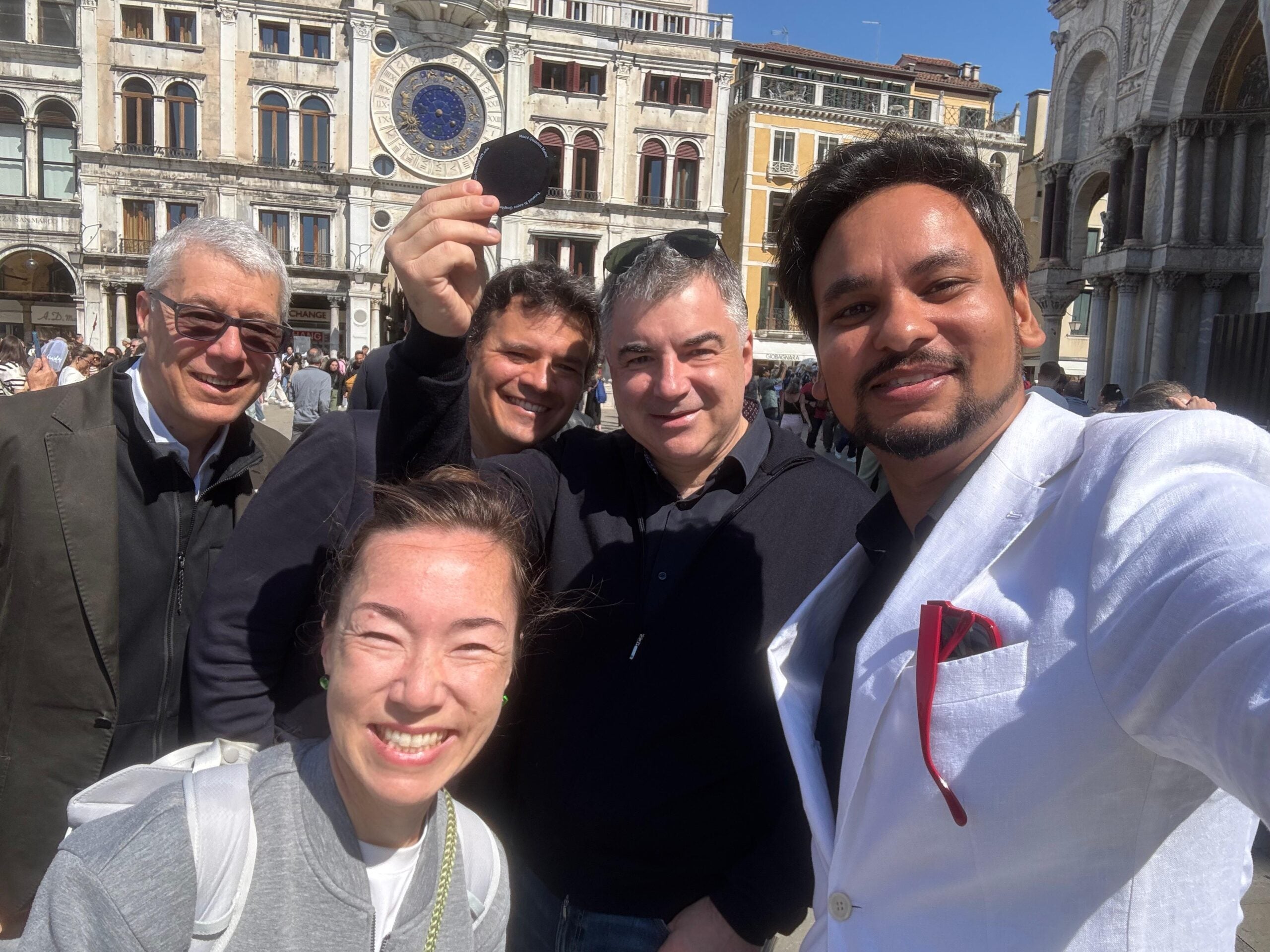
This collaboration bridges disciplines including physics, architecture, chemistry, and engineering — reflecting I-FIM’s core mission to integrate scientific innovation into real-world design applications.
Exhibition Highlights
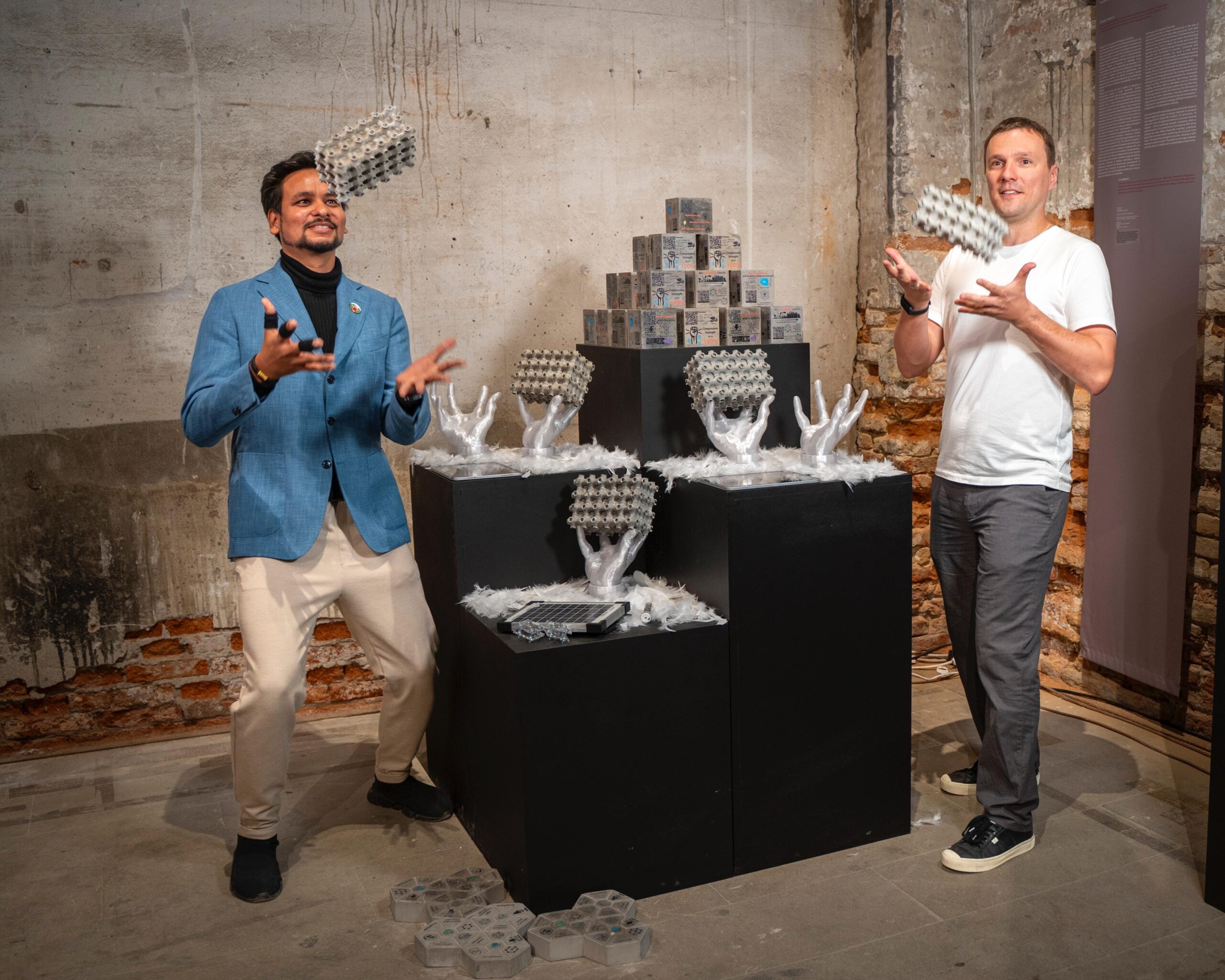
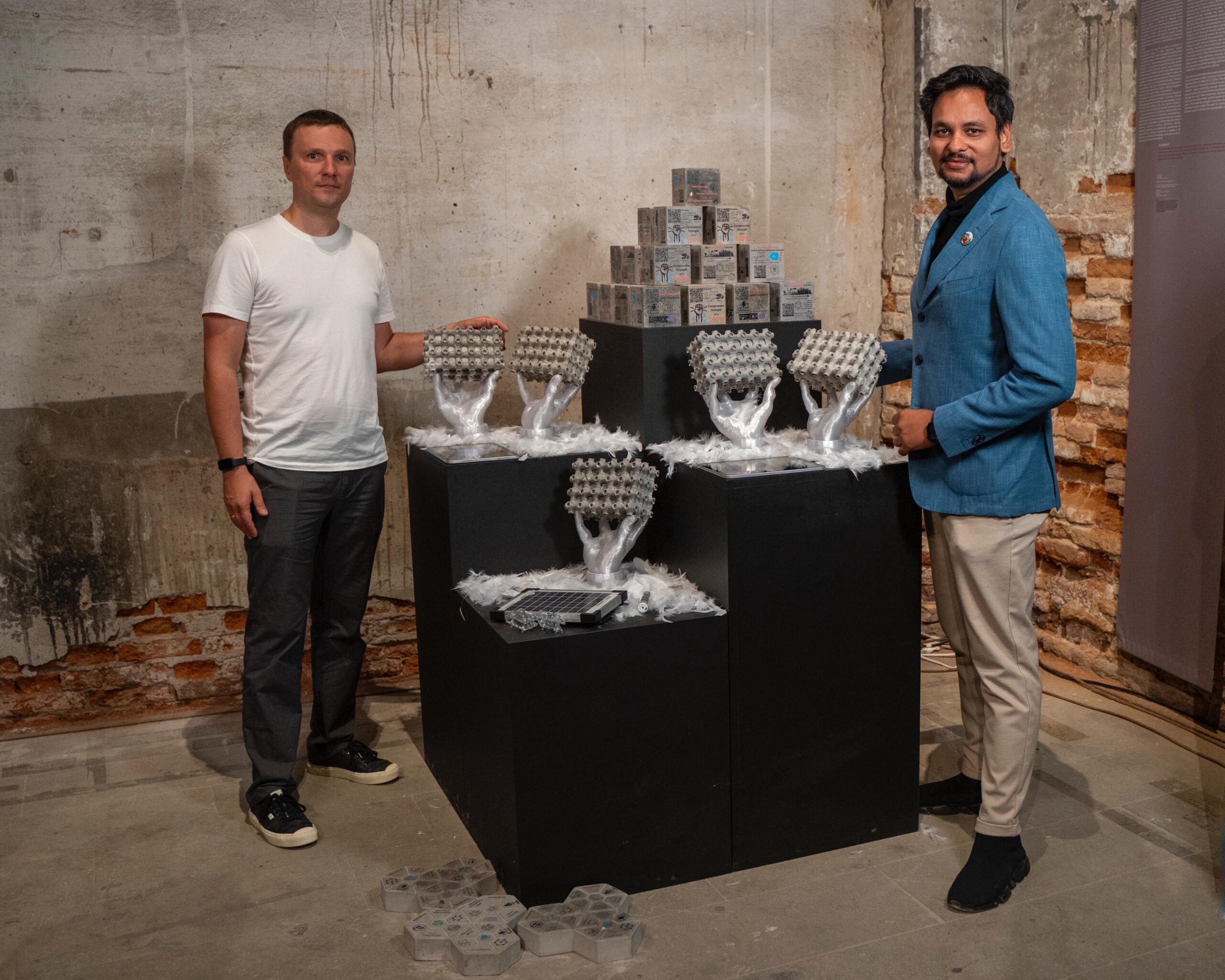
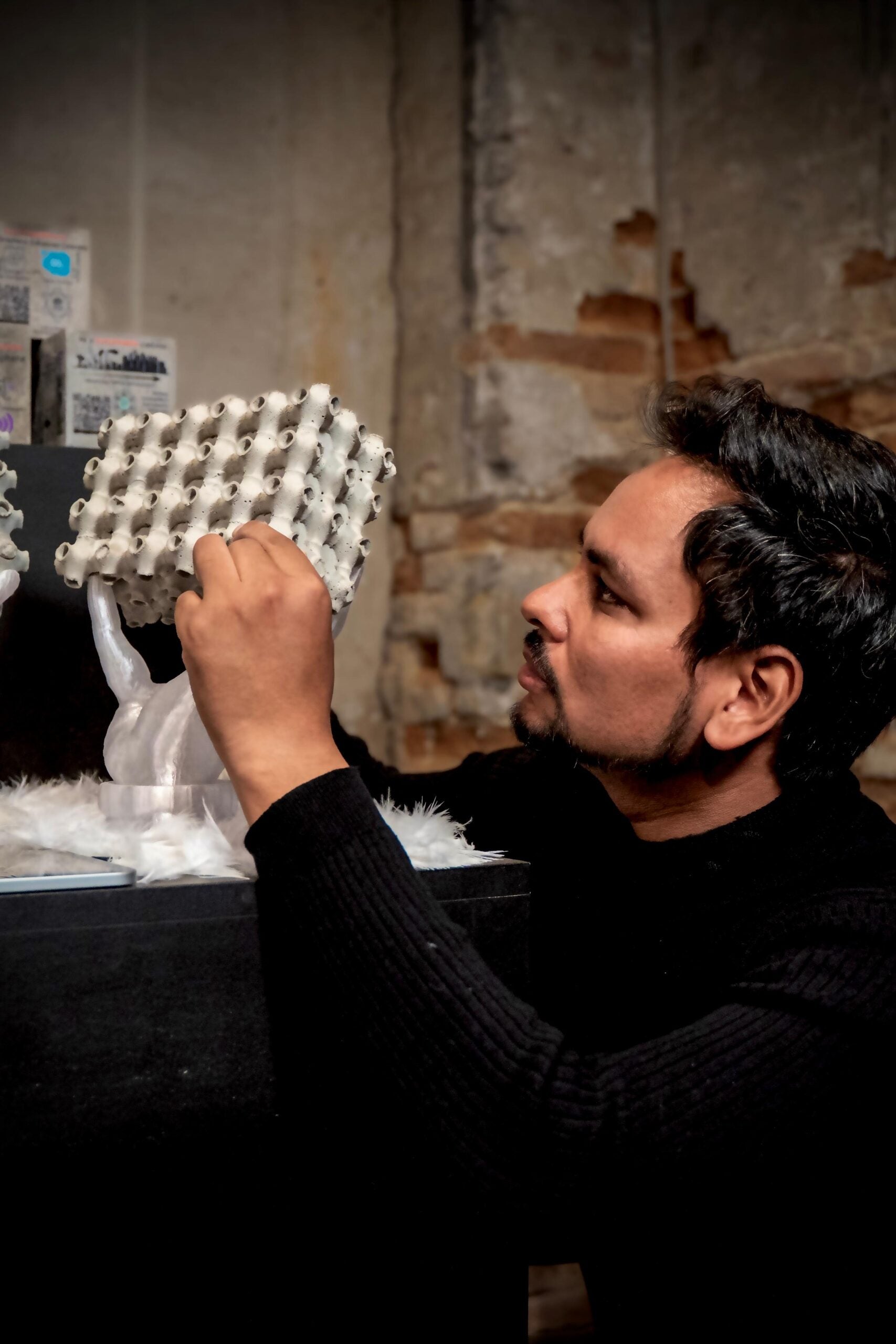
Building with Intelligent Matter
This year’s Biennale reminds us that the future of architecture lies not only in the spaces we design, but in the materials we choose to build with. Graphene — as both enhancer and enabler — represents a new generation of intelligent material systems capable of transforming performance, aesthetics, and environmental impact.
“The Biennale doesn’t just ask what we can build next — it asks what we must build from,” reflected Ar. Goel.
Plan Your Visit
📅 Open to the public: 10 May – 23 November 2025
📍 Venice, Italy
🔗 Explore the official exhibition site
🔗 Learn more about the project at https://www.concretegraphene.com/